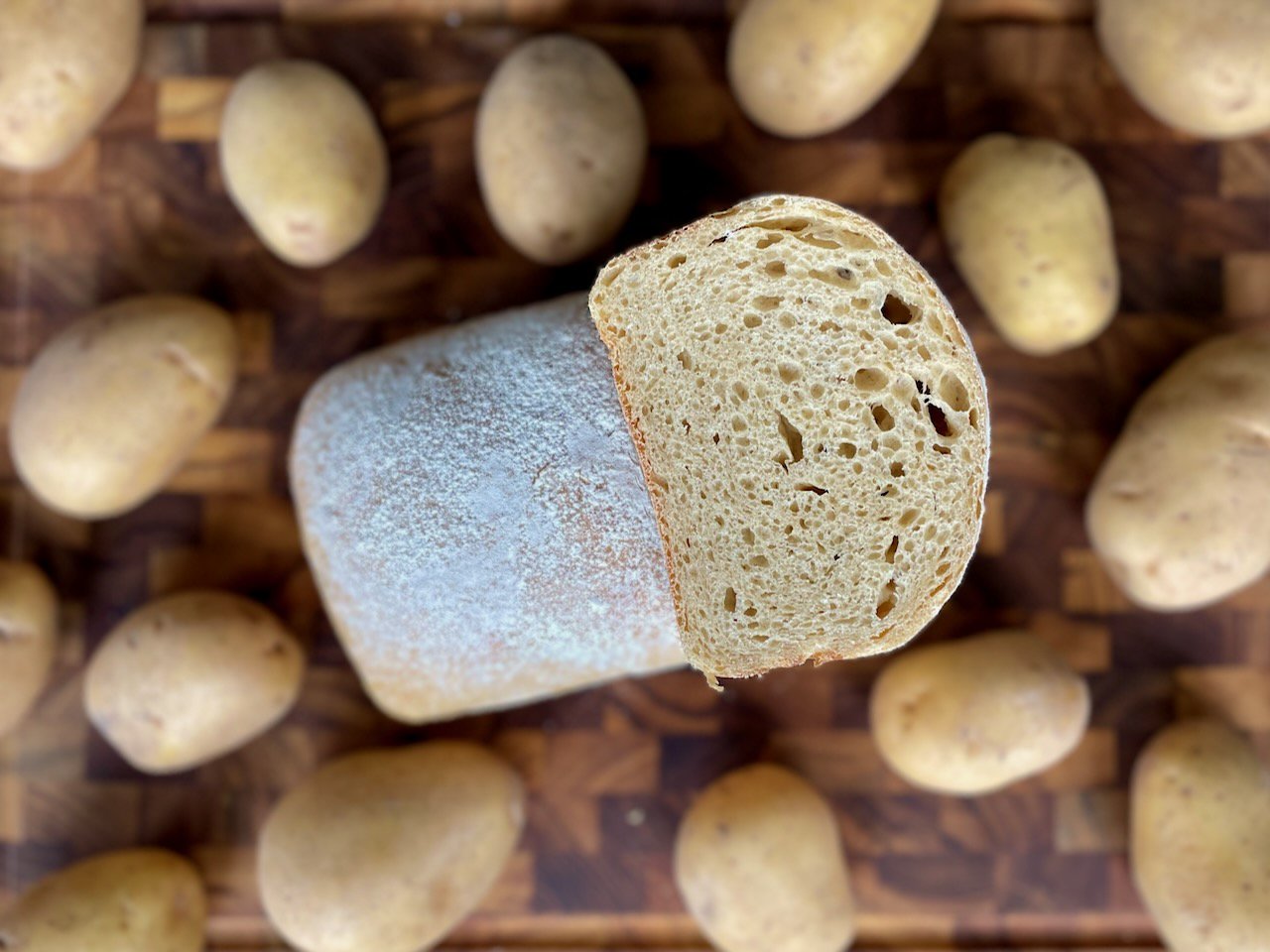
Sourdough Potato Bread
Soft, fluffy, and just a little bit tangy. Mashed potatoes, butter, and eggs make this loaf rich and tender, while sourdough keeps things interesting. Think classic potato bread energy, but with better flavor and a little more personality. It’s excellent toasted, excellent not toasted, and excellent slathered in butter any time of the day.
Ingredients
- 170 grams (6 oz or about 1 medium) Yukon gold potato peeled and cut into large chunks
- 390 grams (2¾ cups) bread flour plus more as needed and for topping
- 6 grams (1 tsp) fine salt
- 125 grams (½ cup) sourdough starter active and fed
- 2 large eggs
- 56 grams (¼ cup) butter melted and cooled, plus more for pan
- 60 grams (¼ cup) potato cooking water
Instructions
- Bring a large pot of water to a boil. Add the potatoes and cook for 15–20 minutes, until fork‑tender.
- Using a slotted spoon, transfer the potatoes to a small bowl. Reserve the cooking water. Mash the potatoes with a fork and let cool for about 10 minutes.
- In the bowl of a stand mixer, whisk together the flour and salt. Add the sourdough starter, eggs, and melted butter.
- Once the potatoes have cooled slightly (they should be warm but not hot, roughly 100–120°F), add the mashed potatoes and 60 grams (¼ cup) of the reserved potato water. Mix until a rough dough forms.
- Knead with the dough hook on medium‑low speed until the dough is smooth, elastic, and clearing the sides of the bowl, 10–15 minutes. The dough should feel smooth and tacky, but not sticky. If it’s sticking to the bowl or your fingers, add more flour 1 tablespoon at a time, mixing well between additions, until the texture is right. The dough should pass the windowpane test (see notes).
- Lightly oil a clear container or bowl. Transfer the dough to the container, mark the top of the dough with a washable marker or rubber band, and cover.
- Let rise at room temperature until increased in volume by about 50–100%, 4–6 hours depending on room temperature and starter strength. If your kitchen is chilly (below 70°F), proof in the oven with the light on. Consider leaving yourself a reminder note so you don’t accidentally preheat your dough.
- Butter a 9×5‑inch loaf pan. Flour a work surface. Lightly wet your hands, then gently deflate the dough and turn it out onto the floured surface.
- Stretch the dough into a rough square, then roll or pat it into a rectangle about 5×16 inches. Fold the dough in thirds, bringing the short ends in toward the center.
- Starting from one short edge, roll the dough up tightly, like a sleeping bag. Pinch the seam and ends closed.
- Lightly flour the surface and roll the dough into an even log about 8 inches long. Place seam‑side down in the prepared pan. Cover with a damp towel or lightly greased plastic wrap.
- Let rise until roughly doubled in volume, 3–6 hours.
- When the dough is ready, preheat the oven to 350°F. Dust the top of the loaf generously with flour.
- Bake for 40–50 minutes, until deeply golden and the internal temperature reaches at least 190°F.
- Cool in the pan for 5 minutes, then turn out onto a wire rack and cool completely before slicing. Once sliced, store in a sealed bag at room temperature for up to a week, or freeze for longer storage.
Notes
Hydration Notes (Read This If Your Dough Feels Weird)
Potatoes vary wildly in moisture content, which means this dough can feel different every single time you make it. That’s normal and not a personal failure.
If the dough feels loose or sticky after several minutes of kneading, add flour gradually—1 tablespoon at a time—until the dough is smooth and tacky but releases cleanly from the bowl.
If the dough feels stiff or dry early in mixing, drizzle in additional potato water or plain water 1 teaspoon at a time until the dough softens. Err on the side of slightly tacky; the dough will continue to hydrate as it rests.
How to Test for Windowpane
To test gluten development, pinch off a small piece of dough and gently stretch it between your fingers. If you can stretch it thin enough to see light through it without tearing, it’s ready. If it tears, keep kneading, let the dough rest for a few minutes, and test again.