
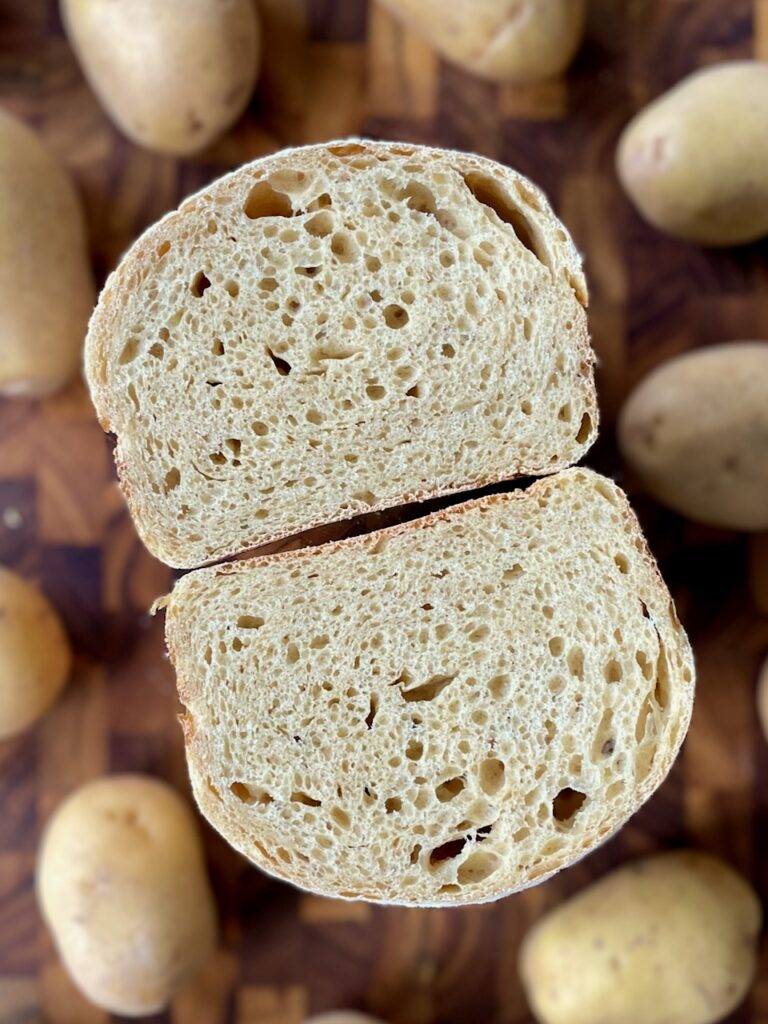
This fluffy and flavorful sourdough potato bread is enriched with mashed potatoes, butter, and eggs—so it’s tender, sliceable, and perfect for everyday use.
Growing up in a family of health‑conscious, Pacific Northwestern white people, I rarely saw bread that wasn’t whole wheat, multigrain, studded with seeds, or otherwise determined to be as fibrous as possible. Over time, I’ve come to genuinely love this style of bread—but as a kid, I mostly just wanted soft white sandwich bread like everyone else.
Although we never had anything quite like Wonder Bread in the house, we did occasionally get a loaf of sourdough. And on even rarer, truly blessed occasions, potato bread.
Sourdough was, and still is, my ride‑or‑die favorite. But potato bread? That felt like winning the lottery. With its soft yet sturdy crumb and buttery flavor, it put even Wonder Bread to shame. I used it for PB&Js, stacked it high with cold cuts, turned it into an elite batch of French toast, grilled the perfect cheese, or—my personal favorite—simply toasted it and ate it with butter and a little salt.
This sourdough potato bread recipe is my way of combining two childhood favorites into one deeply nostalgic, extremely snackable loaf.
Mashed potatoes, butter, and eggs give it the signature softness and richness of classic potato bread, while the sourdough leaven adds a gentle savory tang and a more open crumb. The result is a soft, fluffy sourdough sandwich bread that somehow manages to be both comforting and interesting at the same time.
I use this loaf in all the same ways I did as a kid—sandwiches, toast, French toast, grilled cheese—but now it’s not reserved for special occasions. This is the kind of soft sourdough sandwich bread you can bake regularly, keep on the counter, and reach for whenever you want something comforting and genuinely good. It’s for whenever I feel like making really good bread and eating it however I damn well please. And now, you can do the same.
Frequently Asked Questions About Sourdough Potato Bread
What does adding potato do to sourdough bread?
Mashed potatoes make sourdough bread softer, more moist, and slower to stale. Potato starches help retain moisture, resulting in a tender crumb that stays fluffy for days.
Is sourdough potato bread good for sandwiches?
Yes. This loaf is soft enough to bite through easily but sturdy enough to hold fillings, making it ideal for sandwiches, toast, grilled cheese, and French toast.
Can I use leftover mashed potatoes?
You can, as long as they’re plain (no milk, cream, or garlic). Because moisture levels vary, you may need to adjust the flour or liquid slightly.
Why is my dough sticky?
Potatoes vary in moisture content. If your dough feels sticky after kneading, add flour 1 tablespoon at a time until the dough is smooth and tacky but not sticky.
Can I make this with sourdough discard?
This recipe is designed for active sourdough starter. For discard-friendly options, check out my sourdough discard recipes.
More like this Sourdough Potato Bread:
If you like this one, I’m willing to bet you’ll also love my Sourdough Brioche and Sourdough Milk Bread. For something slightly heartier, but just as delicious, check out my Whole Wheat Sourdough Brioche and Honey Whole Wheat Sourdough Sandwich Bread. My entire collection of sourdough bread recipes can be found here and my sourdough discard recipes are here.
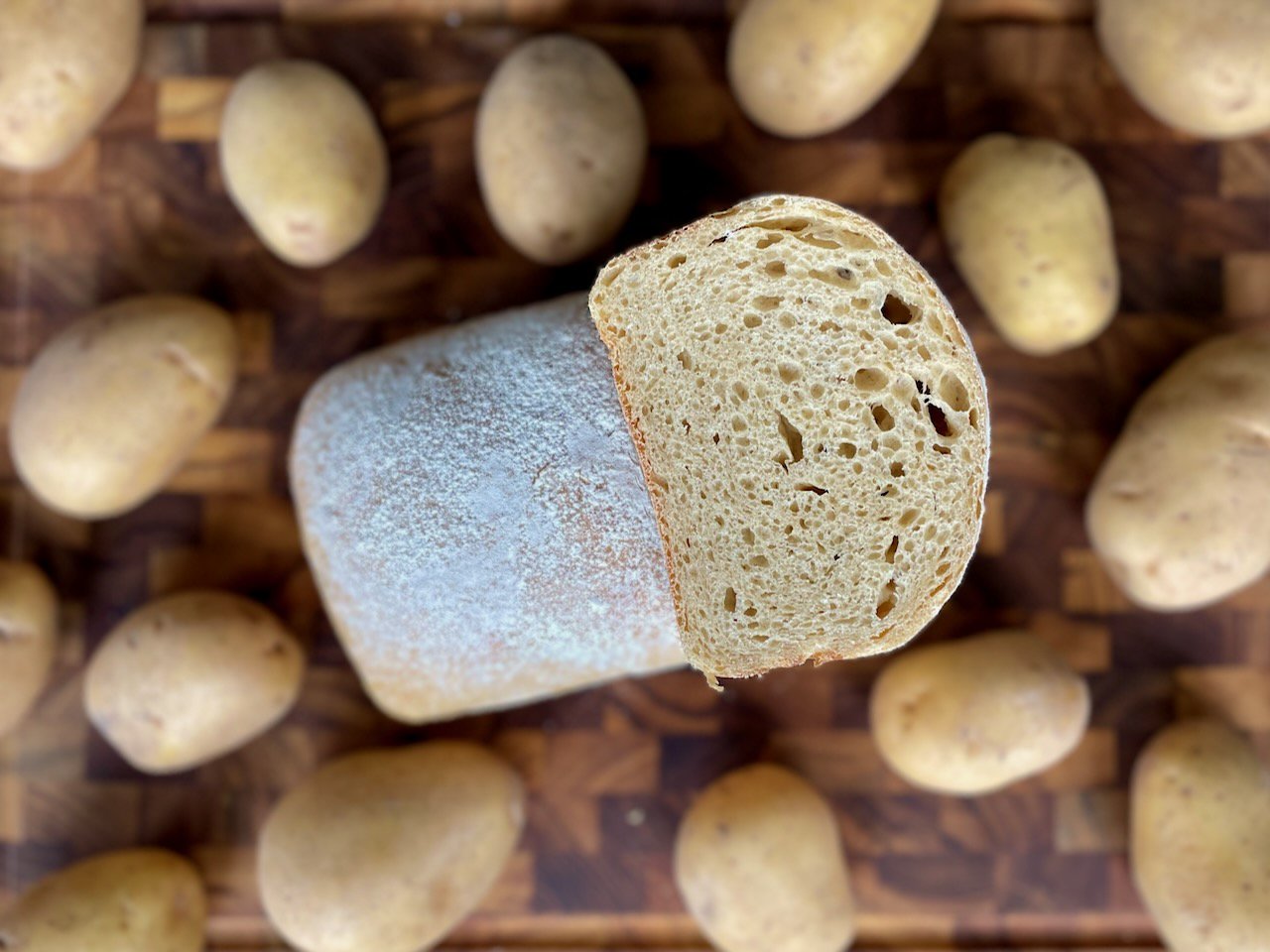
Sourdough Potato Bread
Ingredients
- 170 grams (6 oz or about 1 medium) Yukon gold potato peeled and cut into large chunks
- 390 grams (2¾ cups) bread flour plus more as needed and for topping
- 6 grams (1 tsp) fine salt
- 125 grams (½ cup) sourdough starter active and fed
- 2 large eggs
- 56 grams (¼ cup) butter melted and cooled, plus more for pan
- 60 grams (¼ cup) potato cooking water
Instructions
- Bring a large pot of water to a boil. Add the potatoes and cook for 15–20 minutes, until fork‑tender.
- Using a slotted spoon, transfer the potatoes to a small bowl. Reserve the cooking water. Mash the potatoes with a fork and let cool for about 10 minutes.
- In the bowl of a stand mixer, whisk together the flour and salt. Add the sourdough starter, eggs, and melted butter.
- Once the potatoes have cooled slightly (they should be warm but not hot, roughly 100–120°F), add the mashed potatoes and 60 grams (¼ cup) of the reserved potato water. Mix until a rough dough forms.
- Knead with the dough hook on medium‑low speed until the dough is smooth, elastic, and clearing the sides of the bowl, 10–15 minutes. The dough should feel smooth and tacky, but not sticky. If it’s sticking to the bowl or your fingers, add more flour 1 tablespoon at a time, mixing well between additions, until the texture is right. The dough should pass the windowpane test (see notes).
- Lightly oil a clear container or bowl. Transfer the dough to the container, mark the top of the dough with a washable marker or rubber band, and cover.
- Let rise at room temperature until increased in volume by about 50–100%, 4–6 hours depending on room temperature and starter strength. If your kitchen is chilly (below 70°F), proof in the oven with the light on. Consider leaving yourself a reminder note so you don’t accidentally preheat your dough.
- Butter a 9×5‑inch loaf pan. Flour a work surface. Lightly wet your hands, then gently deflate the dough and turn it out onto the floured surface.
- Stretch the dough into a rough square, then roll or pat it into a rectangle about 5×16 inches. Fold the dough in thirds, bringing the short ends in toward the center.
- Starting from one short edge, roll the dough up tightly, like a sleeping bag. Pinch the seam and ends closed.
- Lightly flour the surface and roll the dough into an even log about 8 inches long. Place seam‑side down in the prepared pan. Cover with a damp towel or lightly greased plastic wrap.
- Let rise until roughly doubled in volume, 3–6 hours.
- When the dough is ready, preheat the oven to 350°F. Dust the top of the loaf generously with flour.
- Bake for 40–50 minutes, until deeply golden and the internal temperature reaches at least 190°F.
- Cool in the pan for 5 minutes, then turn out onto a wire rack and cool completely before slicing. Once sliced, store in a sealed bag at room temperature for up to a week, or freeze for longer storage.

The dough is VERY sticky. Even once it has reached the window test. Does it need more flour? I had to add a handful of flour before it could get it stiff enough to not totally stick to the bowl and it was still really sticky. Had to flour my hand to shape it to go in the bowl to rise. I’m kind of a newbie to sourdough, but my other attempts were not this sticky.
Yes, it probably needs more flour. The amount can vary based on how much moisture is in the potatoes. I would recommend to work in more flour as needed until the dough is smooth.