
Tomatoes, Squash, and a Simmer: A Sauce for Peak Garden Season
When the veggie overflow starts raising my stress levels, I know it’s time to simmer down. Literally.
The rows of tomatoes my husband has laid out on every available flat surface? Oh, they’re going in. The mountains of summer squash crammed in the crisper? Say goodbye. The ever-present collection of herbs and hot peppers? Now is their time to shine. Even the Parmesan rinds I hoard for no good reason finally get their moment.
Together, they become a deeply flavorful summer pasta sauce that’ll be clinging to spaghetti strands long after tomato season is just a fond memory.
Summer Lovin’ in a Jar
Yes, this sauce is a total garden-clearer (or farmers market un-hauler, or coworker-over-share-absorber). But the real beauty is the slow-simmered richness that develops as everything cooks down. Tomatoes that actually taste like tomatoes, fragrant herbs and aromatics, a touch of heat from chilies, and a subtle sweetness from grated squash all meld together into one deeply satisfying red sauce.
Simmering also reduces the sauce into a thick, clingy texture that hugs noodles like a dream. Bonus: less volume = less storage space. This sauce freezes beautifully, but if you prefer to freeze your tomatoes whole or use them canned, you can still make this sauce later. It’s flexible like that.
A Midsummer Garden’s Dream: The Cast List
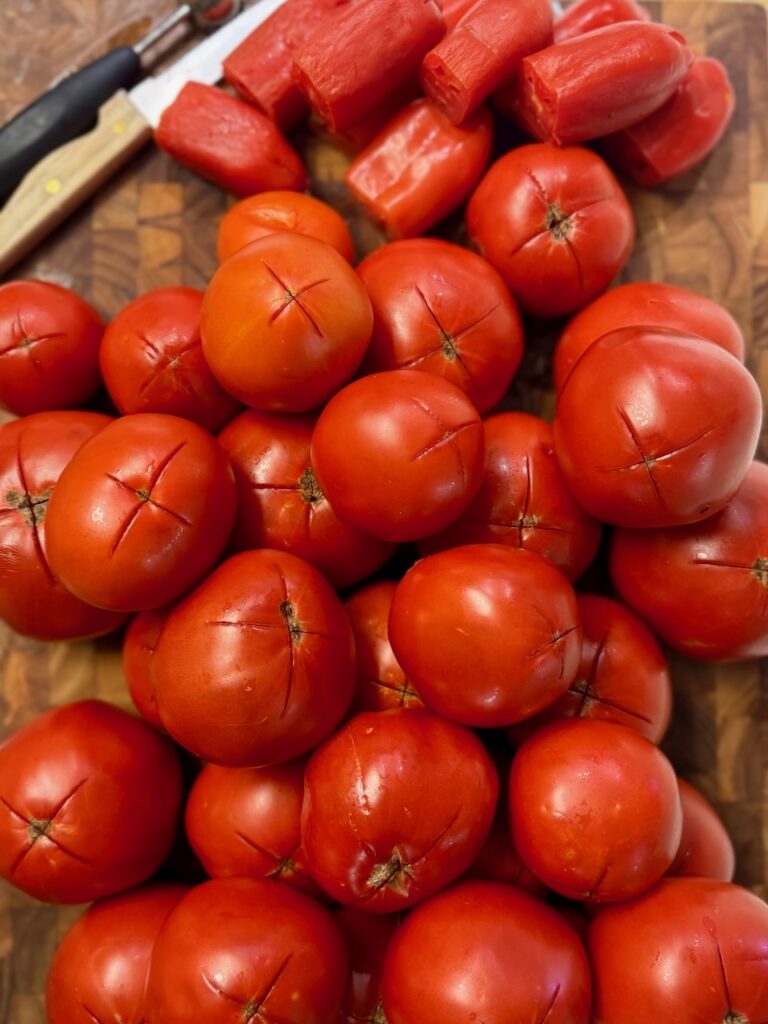
Tomatoes (The Stars of the Show): If you’re starting with canned or frozen, congrats—you’re already a step ahead to saucing glory (skip step one in the recipe). If you’ve got fresh tomatoes, you’ll need to peel them first. It’s not hard, and I walk you through it. Optional: seed your tomatoes for a smoother sauce. But honestly? I don’t bother. The seeds add a touch of bitterness, but they also bring umami and texture. Most canned tomatoes include them anyway.
Summer Squash (The Sneaky Veg): Zucchini, patty pan, crookneck—whatever’s overgrowing in your garden is fair game. Grated squash adds sweetness, body, and contributes to that rich, velvety texture. It’s also a smart way to use up 16 ounces of something that multiplies like rabbits.
Garlic & Shallot (The Aromatic Duo): No sauce is complete without a solid flavor base. Garlic is non-negotiable, and shallots offer a delicate sweetness. Don’t have shallots? Onion works fine.
Chilies (The Spicy Love-Interest): I’m kind of a weenie when it comes to heat, and my husband is even worse. For just a touch of spice, I only leave some of the seeds. But you do you. Keep the seeds (and upgrade to a hotter chili) if that’s how you get your kicks. I’m not here to kink shame.
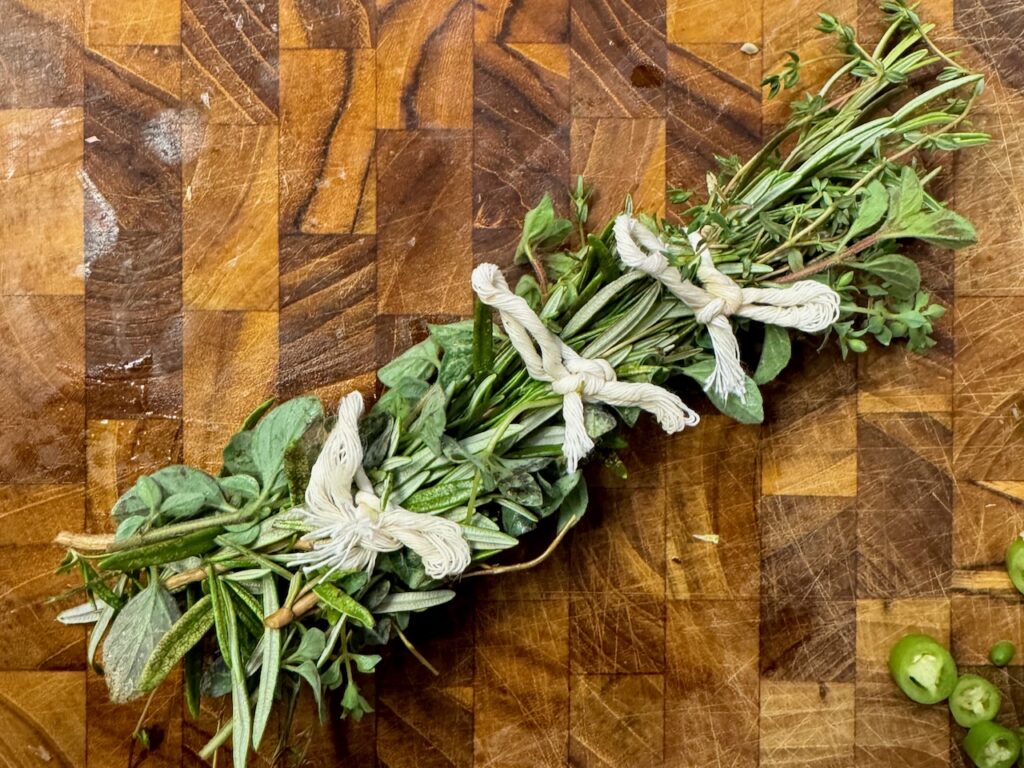
Rosemary & Thyme (The Bundle of Joy): Yes, you can strip the leaves and toss them in—but I prefer the lazy-but-effective version: tying the sprigs together with twine. The herbs infuse the sauce during simmering, and then you just fish out the bundle at the end. Less time fussing with tiny leaves, more time savoring the herbaceous flavor.
Parmesan Rind (The Optional Umami Bomb): Maybe I’m weird, but I have a hard time throwing out parmesan rinds. Into the freezer they go for eternity. But call me vindicated, because the rinds meld beautifully into this sauce, enriching everything with even more umami. It’s subtle but it adds so much. Don’t have any? You’ll still end up with something delicious.
Sauce Up Your Life: Serving Suggestions
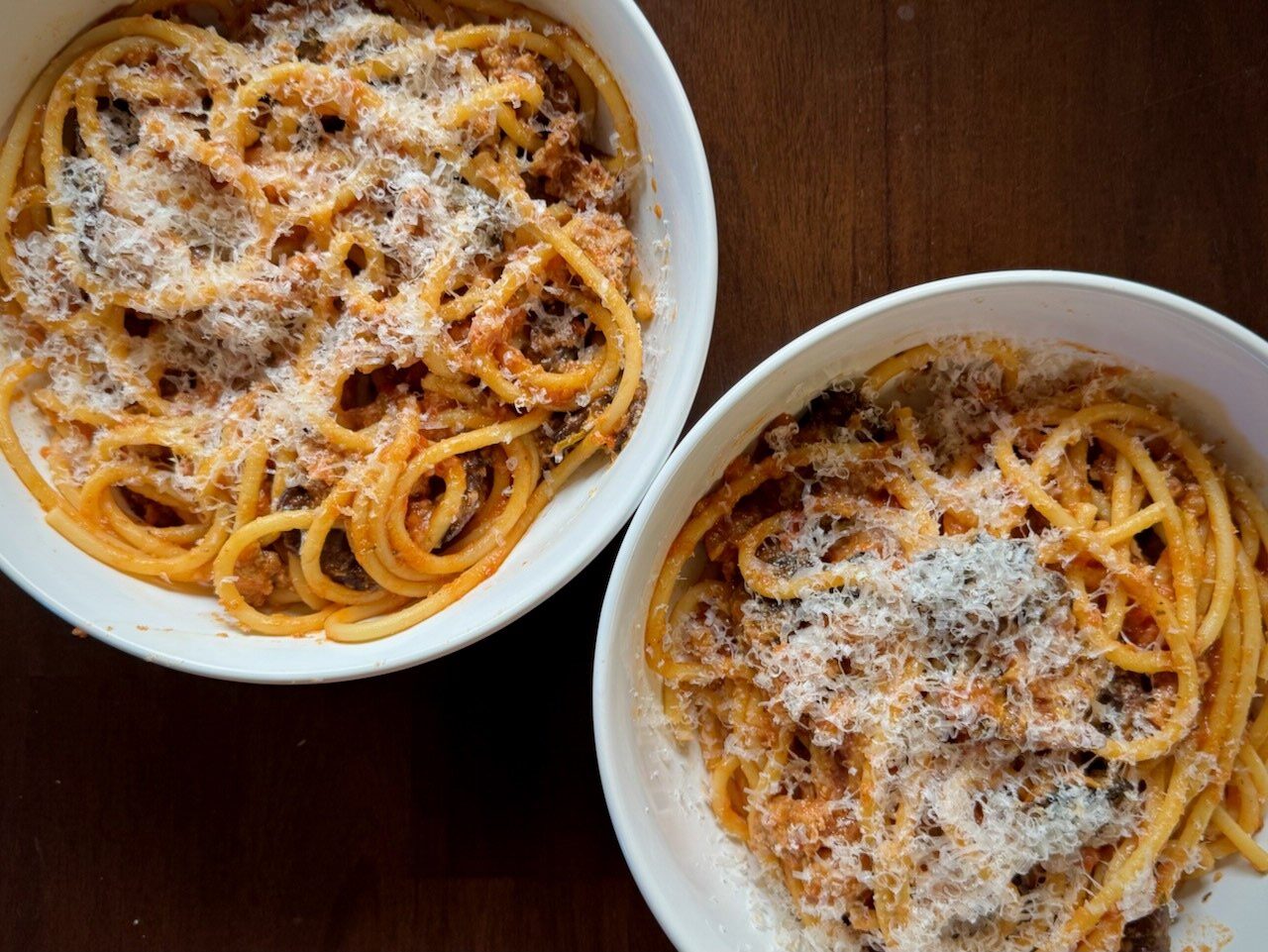
- Toss with pasta (obviously): Add your favorite noodles, some cheese or protein, and dinner is done. A classic for a reason.
- Use as a pizza base: This sauce thickens as it simmers, so it works beautifully on pizza—just cook it down a little more if needed.
- Dunk and dip: Serve warm with grilled bread, roasted veggies, mozzarella sticks, or even wings.
To Summer-finity and Beyond: Tips for Storing and Freezing Homemade Pasta Sauce
One of the best parts of this sauce—besides how much fridge space it clears—is how well it holds up in storage. Whether you’re batch-cooking for the winter or just trying to survive tomato season with your sanity intact, here’s how to store and freeze your summer sauce for maximum flavor and convenience:
Refrigerator Storage
- Store cooled sauce in an airtight container in the fridge for up to 5 days.
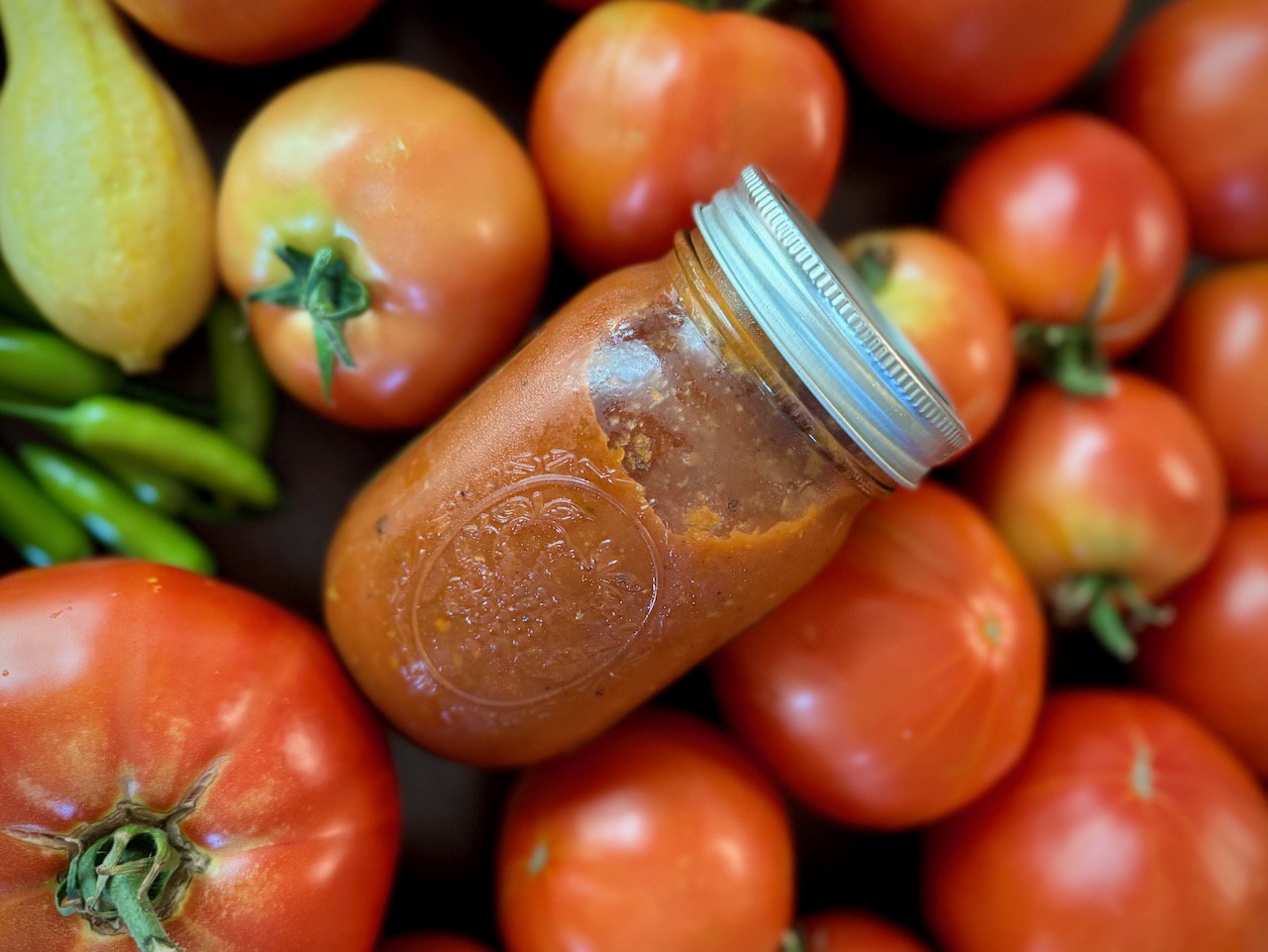
- Glass jars or wide-mouth containers work great, especially if you’re planning to use it soon.
Freezing Instructions
- Freeze in pint or quart containers (I use quart size zip-top bags)—just be sure to leave at least an inch of headspace to allow for expansion.
- Want smaller portions? Freeze the sauce in ice cube trays, then transfer the cubes to a freezer-safe bag. These little flavor bombs are perfect for quick meals, soups, or just enough sauce for one.
- Label containers with the date—your future self will thank you. This sauce will keep in the freezer for up to 6 months, though ours never seems to make it past January.
Thawing + Reheating Tips
- To thaw, place the container in the fridge overnight or set it in a bowl of warm water for a quicker option.
- Reheat gently on the stovetop, stirring occasionally, until warmed through. Add a splash of water or broth if it’s too thick.
Savior or Sauce? You Be the Judge.
My husband and I are completely unhinged when it comes to spring planting. Every nursery trip is a free-for-all. Our total lack of foresight means we spend our August weekends drowning in produce. Saucing has become our end-of-summer ritual—something to do when the tomatoes go feral.
It’s a calming, cozy practice that also gives us something to look forward to months down the road. Then when we’re slurping saucy noodles in December, we’ll be dreaming of all the things we can over-plant next year, so we can do it all over again.
If you make this seductive summer sauce, I’d love to hear about it. Leave a rating, drop a comment with your tweaks, or tag me on socials—those things warm my heart almost as much as a bowl of spaghetti.
More Ways to Tame the Summer Harvest:
Basil—another summer fiend that needs wrangling—is food-processed into submission in my Lemon & Herb Pesto.
My husband’s Tomato Jam with Hot Peppers is a spicy way to harness the tomato chaos.
Drowning in tomatillos? Try my husband’s Salsa Verde with Zucchini. Bright, punchy, and freezer-friendly, too.
And if chilies are your garden’s dominant species, my Fermented Hot Sauce is the tangy, fiery fix.
Summer Pasta Sauce (with fresh or canned tomatoes)
Equipment
- Kitchen twine
- Stock pot
- Immersion blender
Ingredients
- 4 lbs fresh tomatoes or substitute 56 oz canned whole tomatoes in juice
- 1 tbsp olive oil
- 8 cloves garlic crushed and roughly chopped
- 1 shallot chopped
- 16 oz summer squash coarsely grated
- 2 serrano peppers or 1 jalapeño, stem removed (and seeds removed if you prefer less spice), sliced
- 1 tsp kosher salt
- ½ tsp ground black pepper
- 2 sprigs rosemary
- 6 sprigs thyme
- Optional 1–2 inch piece of Parmesan rind
Instructions
- If using fresh tomatoes: Bring a large pot of water to a boil. Core tomatoes and cut a small “x” into the bottom of each one. Blanch for around 60 seconds, just until skins start to loosen from the flesh. Transfer to an ice bath. Peel tomatoes into a fine mesh sieve placed over a bowl to catch drippings. If desired (for a smoother consistency) scoop out seeds with your fingers. Collect peeled tomatoes in a large bowl and add in the juice from under the sieve.
- Heat olive oil in a large stock pot over medium heat.
- Add garlic and shallot. Cook, stirring frequently, just until fragrant and beginning to soften—about 2–3 minutes.
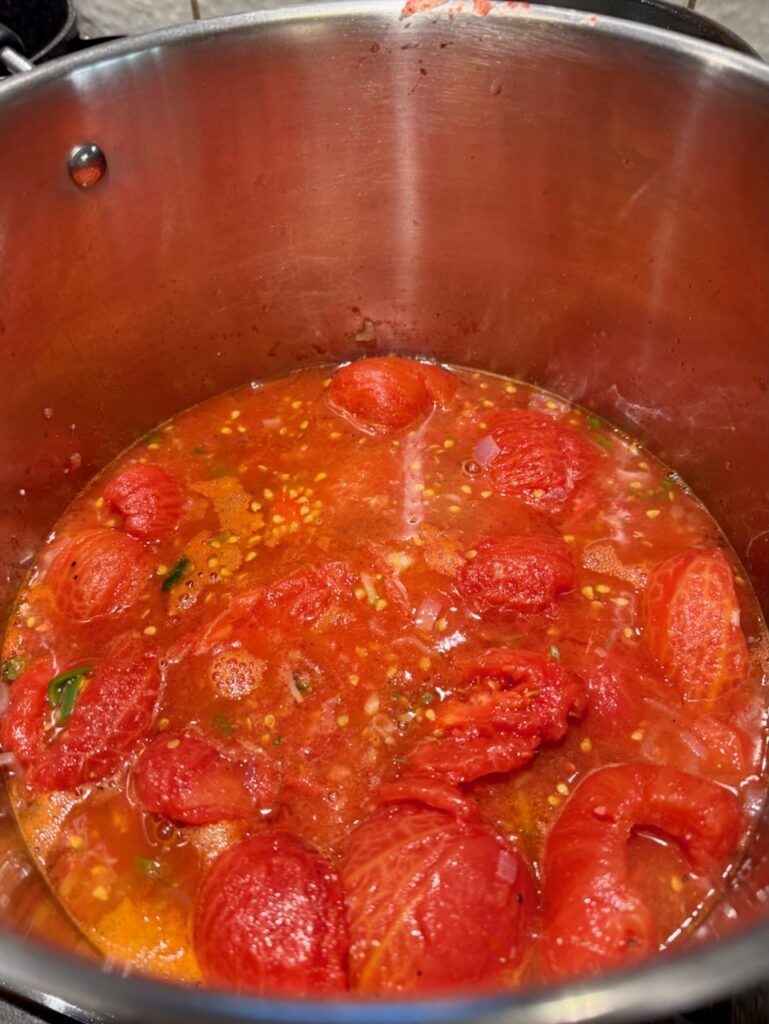
- Stir in the tomatoes (canned or fresh) with juice, grated summer squash, chopped chili peppers, salt, and black pepper.
- Tie rosemary and thyme sprigs into a bundle using food-safe twine. Add to the pot along with the Parmesan rind, if using.
- Simmer uncovered, stirring occasionally, until the sauce is thickened and reduced by about half, 60–90 minutes. Adjust heat as needed to maintain a steady but gentle simmer.
- Remove and discard the herb bundle and any remaining Parmesan rind. Use an immersion blender to purée the sauce to your desired texture. Alternatively, transfer to a blender and blend in batches.
- Taste and adjust seasoning with additional salt and pepper, if needed.
